ProductsGlyph Pocket·the patient's interface
The bag, made permanent
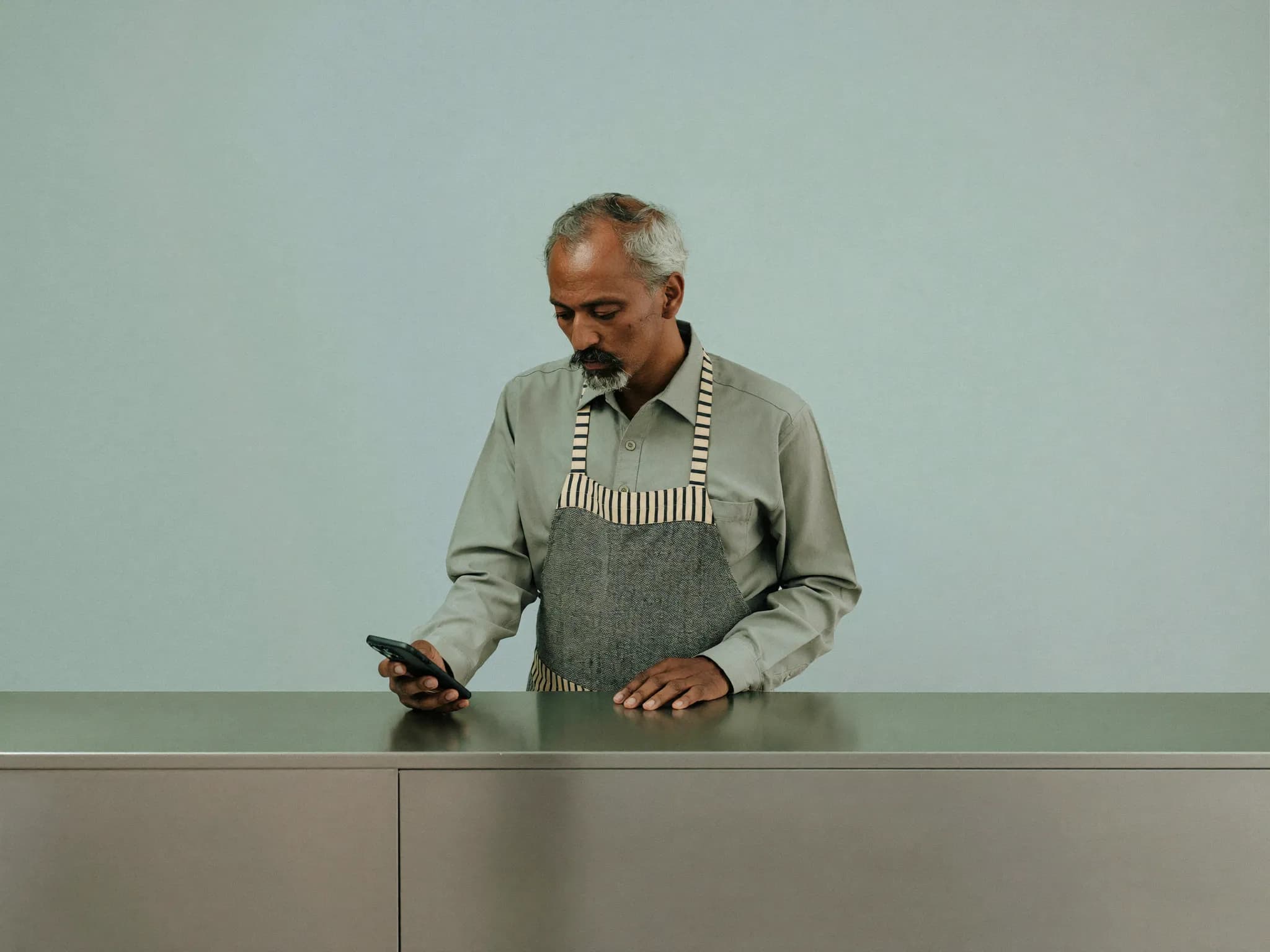
A 52-year-old shopkeeper in Jatrabari has hypertension he half-knows about. When his head aches he walks to the pharmacy ninety meters away and buys what the drug seller suggests. He has never had a check-up. He will see a doctor when something frightens him, and that doctor will know nothing about him, because nothing about him is written anywhere except in a bag he may or may not bring. He is not careless. He is responding rationally to a system where the pharmacy is near, the doctor is far, and no one keeps his story.
Patients · Families · Diaspora
Glyph Pocket · the patient's interface
01
The evidence
The pharmacy is the de facto front door of the health system. A Dhaka study of patients seeking care for respiratory illness found only 10% had seen any other provider before the pharmacy, and most of those had come from another pharmacy. Self-medication prevalence runs as high as 88% in surveyed groups, informed by old prescriptions, family advice, and the internet.
Care is skipped because care impoverishes: 16.4% of households forgo needed care because of cost, and out-of-pocket spending stands at 73% of total health expenditure. Meanwhile the phone is already in the household. The national statistics bureau reports 98.9% of households with a mobile phone and 72.4% with a smartphone. The Surokkha vaccination platform reached roughly 60 million users, proof that Bangladeshis adopt a digital health credential when it is simple and necessary.
02
What Pocket does
Pocket is the patient's wallet, voice, and memory. Free, in Bangla, voice-first, designed for shared family phones and thin data.
Every credential issued anywhere in the Glyph network lands in the patient's wallet, signed by its issuer: prescriptions from Chamber, results from Lens, dispensings from Pharmacy, discharge summaries from Hospital. The patient can also photograph the legacy paper at home, turning the existing bag into the opening balance of a lifelong record. The wallet survives the rain, the move, and the years.
Before the shopkeeper asks the drug seller, he can ask Pocket. KhaM-Med answers in plain Bangla at his comprehension level: what this probably is, what to watch for, whether the pharmacy is enough or a doctor is needed, and which kind of doctor. Red-flag symptoms escalate firmly. This is a chest-pain-go-now system, not a chatbot that chats.
When a doctor is needed, Pocket matches by clinical need, geography, language and dialect, gender preference, and budget, then remembers. The second visit goes to the same doctor. A relationship accumulates where the system previously produced only strangers. And family circles extend the wallet to the people who actually manage a household's health: the daughter in London sees her father's blood pressure readings, with consent that is explicit, visible, and revocable.
A ministry database knows the citizen. A Pocket wallet is owned by the citizen.
03
Why it is free
Pocket is free for domestic patients, permanently. Any paywall would exclude precisely the people the system fails most. The wallet's value to every paying interface exceeds any subscription it could charge: Chamber doctors get prepared patients, Lens gets order flow, Pharmacy gets verifiable prescriptions. Paid tiers exist only where ability to pay is structurally different, for diaspora and migrant family coordination. The domestic patient never pays for her own record, and raw patient data is never sold. That commitment is enforced by the architecture itself, because the keys are the patient's.
04
Where it stands
Pocket inherits Chamber's infrastructure and ships after Chamber proves the record is worth holding. The first Pocket users will be the patients of the first Chamber doctors, invited at the end of a visit with their record already in hand. That is the cheapest patient acquisition in healthcare, because the product's value is demonstrated before it is installed.